Handbook of Relationship Initiation
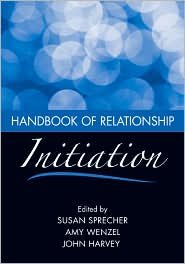
Purchase: Amazon, Barnes & Noble, or Routledge
Romantic and social bonds follow a recognizable sequence: two people encounter each other, evaluate attraction, navigate uncertainty, and take steps toward connection. Scholars refer to these early moments as relationship initiation, and the processes that drive them are more complex, more variable, and more consequential than popular culture tends to suggest.
A single first conversation can lead to a lifelong partnership or dissolve before it ever begins. Understanding why requires a careful look at attraction, communication, cognition, and the many contexts in which modern connections take shape.
Research published in 2024 by Adams and Gillath in Personality and Social Psychology Bulletin found that the setting in which a relationship initiation attempt occurs affects how successful that attempt is perceived to be, even when the verbal approach itself is identical. A separate survey data from an SSRS survey conducted in early 2024, based on a nationally representative sample of 2,011 U.S. adults, found that 37 percent of American adults have used an online dating site or app at least once.
These findings underscore a point that scholars have emphasized for decades: the science of how relationships begin is both practically relevant and chronically underexplored compared to research on relationship maintenance and dissolution.
Book Details
Handbook of Relationship Initiation is an edited academic volume published by Psychology Press, an imprint of Routledge, in 2008. The first edition runs 594 pages and was edited by Susan Sprecher, Amy Wenzel, and John Harvey.
The volume synthesizes empirical research and theoretical frameworks across five major subject areas: the processes that drive relationship initiation, the diverse contexts in which relationships begin, the emotional experiences that accompany early connection, the challenges that prevent or complicate initiation, and the cognitive and belief-based factors that shape how people pursue and interpret early relationship contact.
The primary subjects covered include close relationships, relationship development, interpersonal communication, social psychology, attraction, and mate selection. The book is held in library collections at universities across the United States and internationally and is cited in graduate-level courses in psychology, communication studies, and family science.
Purchase copies are available through Amazon, Barnes & Noble, or Routledge.
Full citation: Sprecher, S., Wenzel, A., & Harvey, J. H. (Eds.) (2008). Handbook of Relationship Initiation. New York: Psychology Press.
What the Handbook of Relationship Initiation Is About
The Handbook of Relationship Initiation focuses on the earliest stage of close relationships, the stage at which two people move from strangers to something more. This stage is often treated as a brief preliminary to the real relationship, but the editors argue that it deserves sustained scientific attention.
How people meet, communicate for the first time, assess potential partners, and begin defining a connection are questions that shape not only whether a relationship forms but how it is experienced long after initiation ends.
The volume brings together top scholars from social psychology, communication studies, and family science to review and synthesize decades of empirical work. It draws on attachment theory, uncertainty reduction theory, evolutionary psychology, cognitive models of relationship beliefs, and interpersonal communication research.
Each section of the book addresses a distinct dimension of relationship initiation, from the neurochemistry of attraction to the social scripts that govern flirting, from the barriers created by social anxiety to the emerging territory of online relationship initiation in wired and wireless contexts.
This is not a book about maintaining a relationship or repairing one. It is specifically about how relationships begin, a focus that sets it apart from the majority of published literature in the field of close relationships.
Major Topics Covered in the Handbook
First Encounters, Attraction, and Friendship Formation
The Handbook of Relationship Initiation examines how romantic relationships emerge from first encounters, including the often-overlooked transition from casual acquaintance or established friendship to romantic partnership. Attraction research, mate selection frameworks, and ideal partner standards all receive dedicated coverage.
The book also addresses the early stages of falling in love, including the emotional and motivational states that accompany initial romantic interest and the conditions under which those states intensify or fade.
Research published in Personal Relationships in 2025 identified a stage researchers labeled "flirtationship," describing the first sparks of attraction and the early mutual signaling that can precede a defined relationship. The Handbook provides the theoretical foundation that explains why these early stages unfold the way they do, drawing on evolutionary, social, and cognitive accounts of mate selection and romantic interest.
Communication, Flirting, and Self-Disclosure
A significant portion of the book addresses how people communicate during relationship initiation. This includes research on opening gambits, the verbal and nonverbal strategies people use to initiate contact with a potential partner. Flirting as a communication system receives detailed treatment, including how signals are sent, received, and interpreted under conditions of genuine uncertainty about mutual interest.
Uncertainty reduction processes, information seeking, and the pacing of self-disclosure are all examined in depth. These sections are grounded in both communication theory and social psychology research. They explain how context shapes message interpretation, how ambiguity is managed across different relationship initiation contexts, and why some initiation attempts succeed while others fail under conditions that appear similar from the outside.
Online Relationship Initiation and Internet Matchmaking
The Handbook includes dedicated coverage of relationship initiation in wired and wireless contexts, a topic that has grown considerably more relevant in the years since publication. The chapters on internet matchmaking services and online relationship initiation examine how digital platforms create environments that structure first contact, shape attraction judgments based on profile information rather than live interaction, and alter the pace and depth of self-disclosure compared to face-to-face initiation.
Contemporary data reinforces why this coverage remains important. Among partnered adults under 30 surveyed by SSRS in 2024, roughly one in five met their current partner online. A 2024 survey by The Knot of nearly 17,000 U.S. couples found that online dating was the single most common way surveyed couples met.
The Handbook's foundational treatment of online initiation processes provides the theoretical context for understanding how digital environments reshape relationship formation, which social psychological mechanisms carry over from in-person contexts, and which do not.
Hookups, Unwanted Relationship Pursuit, and Dissolution as Context
The Handbook addresses relationship initiation not only in its straightforward forms but also in its more complicated expressions. Hookups, defined as brief sexual encounters with limited relational expectations, are examined as a context for relationship initiation that can, in some cases, evolve into committed partnerships, depending on the motivations, attachment styles, and communication patterns of the individuals involved.
Unwanted relationship pursuit, in which one person continues initiation attempts after they have been declined or ignored, is treated as a serious interpersonal and ethical concern with real psychological consequences for both parties. The book examines why unwanted pursuit occurs, how it is experienced by the target, and what interpersonal communication patterns reinforce or discourage it.
The volume also considers relationship initiation that follows the end of a prior relationship, a context shaped by prior attachment history, grief, and the emotional complexity of forming new connections after loss.
Social Anxiety, Depression, and Barriers to Initiation
Social anxiety and depression both receive extended treatment as clinical barriers to relationship initiation. Social anxiety interferes with the ability to approach potential partners, sustain comfortable eye contact, respond fluidly to ambiguous social cues, and interpret the intentions of others with accuracy.
Research published in 2024 in the journal Frontiers in Psychology confirmed that social anxiety is consistently associated with lower intimacy across relationship types and with heightened fear of negative evaluation in social contexts, making it a direct and clinically significant barrier to the initiation process.
For individuals who experience depression, motivation to initiate contact is often diminished, and the cognitive distortions associated with depression can bias interpretation of social signals in a negative direction, causing people to read neutral or even positive cues as rejection. These clinical dimensions of relationship initiation are covered in the Handbook with both theoretical depth and reference to practical implications for treatment.
Beliefs, Cognition, and Relationship Narratives
The final thematic area addresses how people think about relationships during the initiation stage. This includes research on implicit theories of relationships, the idealized expectations people bring into early contact, and the goals and motives that shape whether someone pursues or avoids initiation.
The book also examines "how we met" narratives, the stories couples construct about the origin of their relationship, and what these stories reveal about meaning-making in close relationships over time.
Cognitive schemas about romantic partners and relationship development influence which individuals are approached, how early interactions are interpreted, and whether ambiguous signals are read as encouraging or discouraging. This section connects the interpersonal dynamics of initiation to the broader cognitive science literature and provides a framework for understanding how beliefs and expectations shape relational outcomes from the very first contact.
Who Should Read This Book
Handbook of Relationship Initiation is best suited for researchers in social psychology, communication studies, family science, and interpersonal relations who study relationship formation and close relationship development.
Graduate students working on dissertations or coursework in these areas will find it a rigorous and comprehensive reference volume covering both established findings and directions for future inquiry.
Instructors in psychology, communication, and behavioral science will find the book well-suited as a required or supplemental text in courses on close relationships, social influence, and interpersonal communication. Marriage and family researchers will benefit from its specific focus on the earliest stage of the relational arc, a stage that shapes long-term relational patterns in ways that have not always received proportionate scholarly attention.
Clinicians who work with relationship difficulties, social anxiety, depression, and attachment-related concerns will find relevant theoretical grounding in the book's clinical chapters. While the Handbook is not a clinical manual or treatment guide, its research base provides a strong theoretical foundation for practitioners who work with individuals navigating early-stage relationship challenges or interpersonal avoidance patterns.
Advanced readers with a strong interest in the science of human relationships can also engage productively with this text, provided they have some background in psychological research conventions and academic writing.
Why This Book Stands Apart
Most scholarly literature on close relationships concentrates on what happens after two people have formed a bond: how satisfaction develops, how conflict is managed, how commitment deepens or erodes, and how relationships dissolve. Handbook of Relationship Initiation is specifically concerned with what happens before any of that, with the mechanisms, contexts, and cognitive processes that determine whether a connection forms at all.
This focus has practical significance beyond academic interest. The factors that drive mate selection preferences, flirting behavior, and the interpretation of ambiguous social signals set the foundation for the relationship that follows. A body of literature that rigorously examines these processes gives researchers, clinicians, and students a more complete picture of relational functioning across the full arc of human connection.
The breadth of contributors assembled by Susan Sprecher, Amy Wenzel, and John Harvey ensures that the volume reflects multiple disciplinary traditions without becoming fragmented.
The integration of evolutionary, cognitive, communicative, and clinical perspectives in a single edited volume gives the Handbook an authority that single-authored books on the same topic cannot easily replicate. For any scholar or clinician who wants to understand close relationships at their origin, this volume remains an essential reference.
Praise for the Handbook of Relationship Initiation
Rowland Miller of Sam Houston State University, co-author of the widely used text Intimate Relationships, described the volume as a great handbook that organizes the literature, synthesizes lines of inquiry, and sets paths for future investigation. He noted that the editors assembled a strong cast of contributors from diverse disciplines and identified the book as a landmark work from a maturing science.
Anita L. Vangelisti of the University of Texas at Austin described the collection as ground-breaking, highlighting its synthesis of cutting-edge research and theory on early relationship development. She identified it as a must-read for researchers, practitioners, and students interested in the social, cognitive, and emotional processes through which two people come together to form a relationship.
Explore More of Dr. Amy Wenzel's Work
The Handbook of Relationship Initiation reflects one dimension of a scholarly and clinical career built on the study of cognitive, emotional, and interpersonal processes across the human lifespan. This volume establishes the scientific foundation for understanding how close relationships begin.
The rest of Dr. Wenzel's body of work extends that inquiry into how those relationships are sustained, how clinical realities challenge them, and how evidence-based treatment can address distress across the relational arc.
For readers drawn to the intersection of relationship functioning and clinical care, Cognitive Behavioral Therapy for Perinatal Distress addresses the relational and psychological challenges that accompany pregnancy and new parenthood, including the anxiety and identity disruption that reshape early relationship dynamics in that period. It reflects the same commitment to evidence-based, individualized treatment that runs throughout Dr. Wenzel's clinical writing.
The broader body of work spans more than twenty authored and edited volumes, covering cognitive behavioral therapy techniques, suicide prevention, perinatal mental health, and innovations in CBT practice for complex presentations. The full books collection includes texts written for both clinicians and researchers and provides a complete view of how Dr. Wenzel's scholarship has developed across her career.
For readers interested in her clinical background, faculty appointments, publications, and contributions to the development of Therapeutic Relationship-Focused CBT, the biography page provides a detailed account of her training, credentials, and current professional work. Clinicians, researchers, and training programs seeking to connect with Dr. Wenzel about consultation, speaking, or therapy at her Bryn Mawr practice can reach her directly through the contact page.