Cognitive Methods and Their Application to Clinical Research
Purchase: Amazon
Cognitive psychology and clinical psychology have long developed along separate tracks. Researchers on the cognitive side have built precise laboratory methods for studying how people attend to, process, and remember information.
Clinicians, meanwhile, have spent decades learning how those same processes go wrong in people experiencing depression, anxiety, trauma, and other psychological difficulties. For a long time, those two bodies of knowledge rarely spoke to each other clearly. This book was written to change that.
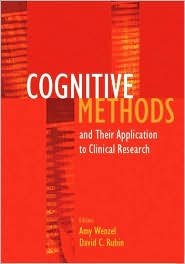
Cognitive Methods and Their Application to Clinical Research is an edited scholarly volume that examines how cognitive psychology methods can be applied to clinical research questions. It is designed to give researchers from either background a shared methodological language, one that is practical, grounded, and directly applicable to the study of cognition in people with psychopathology.
This is not a general introduction to psychology, and it is not a self-help text. It is a focused, scholarly resource for graduate students, clinical researchers, cognitive psychologists, and instructors who want a stronger methodological foundation for studying how the mind works under clinical conditions.
Purchase: Amazon Hardcover
The Gap This Book Was Written to Close
The central problem this volume addresses is a methodological divide. Clinical psychologists working with patients who have anxiety disorders, depression, post-traumatic stress disorder, or related conditions often want to study cognitive processes in those populations.
They want to know how attention, memory, and interpretation function differently in clinical samples. However, clinical training programs rarely provide deep grounding in the cognitive laboratory methods needed to run that kind of research well.
Cognitive psychologists face the opposite challenge. They have considerable expertise in experimental methods, but they may have limited experience designing studies for clinical populations, interpreting findings in a clinical context, or navigating the specific demands of working with people in psychological distress.
Amy Wenzel, PhD, ABPP, and co-editor David C. Rubin structured this volume specifically to address both sides of that divide. Each section of the book contains companion chapters: one chapter written by a cognitive psychologist who developed the method, and a second chapter written by a clinical psychologist who has applied that method to clinical questions. That parallel structure gives readers two perspectives at once and shows how the same research tool can look different depending on the training and goals of the person using it.
The result is a book that does not require readers to choose between methodological depth and clinical relevance. It offers both.
What the Book Covers
The cognitive tasks discussed in this volume are the workhorses of experimental psychopathology research. Each one measures a different aspect of cognitive processing and has been adapted to study how clinical populations differ from healthy controls. Understanding what each task measures and why it matters for clinical research is central to using this book well.
The Stroop task is one of the most widely used measures of selective attention in psychology. In its standard form, participants name the ink color of a word while ignoring the word's meaning. When the word and the ink color conflict, naming the color takes longer. That slowing reflects attentional interference. In clinical research, emotional versions of the Stroop task use words related to specific fears, traumas, or clinical concerns.
Patients often respond more slowly to words that relate to their own symptoms, which suggests that their attention is drawn toward threat-relevant material in ways that are automatic and difficult to override. Research published in 2025 continues to apply Stroop paradigms in clinical contexts, including studies examining how conflict-processing networks respond to emotionally loaded stimuli in a range of clinical populations.
Selective attention tasks more broadly allow researchers to measure how people allocate mental resources when faced with competing information. Clinical populations frequently show patterns of attention that direct focus toward threat, negative affect, or symptom-relevant material. Those patterns are not random. They reflect cognitive architecture that has been shaped by experience, symptoms, and emotional learning. Measuring selective attention gives researchers a way to study that architecture directly.
Implicit memory tasks measure memory that operates without conscious awareness. A person does not have to explicitly recall a prior experience for implicit memory to influence their responses. In clinical research, implicit memory tasks allow researchers to ask whether people are influenced by prior exposure to material even when they have no conscious recollection of it. This line of inquiry is relevant to conditions involving learned associations between cues and distress, including anxiety disorders, phobias, and trauma-related presentations.
Directed forgetting tasks study the ability to suppress or inhibit unwanted memories. Participants are shown material and then told either to remember it or to forget it. The question is whether people can actually reduce their memory for the material they were told to forget, and whether clinical populations differ in that capacity. A 2025 neuroimaging study published in iScience examined directed forgetting in individuals with highly superior autobiographical memory and found meaningful differences in frontoparietal neural activity during encoding, even before explicit forget instructions were given. That finding illustrates how directed forgetting paradigms continue to reveal important aspects of memory regulation in specific populations. In clinical research, directed forgetting tasks have been used to examine whether trauma survivors show reduced capacity to inhibit distressing material, with evidence suggesting that PTSD is associated with a breakdown in the ability to suppress disturbing memories.
Autobiographical memory tasks measure how people recall and construct memories of their own lives. Clinical research using these methods has found that people with depression and a history of trauma often retrieve memories in an overgeneral way, producing categorical summaries rather than specific events. That overgeneral pattern has been linked to difficulty in problem solving, emotional processing, and recovery. Autobiographical memory methods give researchers a structured way to study those patterns and track how they change over time or in response to treatment.
Why Methodology Matters in Cognitive Clinical Research
The methods reviewed in this book matter because cognitive processes are not just theoretical constructs. They are measurable, and the quality of that measurement has direct implications for what researchers can conclude.
A 2025 meta-analysis published in Clinical Psychology Review reviewed 81 longitudinal studies involving 17,709 participants and examined whether cognitive biases reliably predict future anxiety and depression. The analysis found a small but statistically significant overall effect. It also found meaningful variation across studies depending on the specific method used, the population studied, and how cognitive bias was operationalized.
That variability is precisely why methodological clarity matters. When researchers use cognitive tasks that are not well-suited to the question they are asking, or apply methods developed for laboratory samples to clinical populations without appropriate adaptation, findings become difficult to interpret and even more difficult to replicate.
The companion chapter structure of this book reflects that concern directly. By presenting a cognitive psychologist's account of a method alongside a clinical psychologist's account of how that method has been applied to clinical questions, the volume surfaces the methodological decisions that often go unexamined in published research. Readers learn not just what these tasks are, but how they work, what assumptions they carry, and where clinical applications require adaptation.
For graduate students entering research in clinical psychology, cognitive psychology, or experimental psychopathology, that foundation is genuinely useful. Understanding the logic of a method well enough to apply it carefully is different from simply knowing that the method exists.
Who Should Read This Book
This volume is best suited for readers with academic, research, or advanced training interests in psychology. It is a scholarly text, not a clinical workbook or general introduction to mental health.
The book is especially appropriate for graduate students in clinical psychology, cognitive psychology, counseling psychology, or related programs who want a clearer foundation in the methods used to study cognition in clinical samples. It is also a useful reference for clinical researchers who want to expand the tools available to them, for cognitive psychologists moving into clinical research settings, and for instructors teaching courses in cognitive psychopathology, clinical research methods, or experimental approaches to understanding mental health.
Scholars studying cognitive bias, attentional bias, memory impairment, or information processing in specific clinical populations will find the paired chapter format particularly useful. The book does not assume that readers already have dual expertise in cognitive and clinical psychology. Instead, it is organized to build that bridge chapter by chapter.
Book Details
Cognitive Methods and Their Application to Clinical Research was edited by Amy Wenzel and David C. Rubin and published by the American Psychological Association. The book was released in 2005 and is 289 pages in length, according to Google Books. Its primary subject areas are clinical psychology, cognitive psychology, and research methodology.
Full citation: Wenzel, A., and Rubin, D. C. (Eds.) (2005). Cognitive Methods and Their Application to Clinical Research. Washington, DC: APA Books.
Additional details are as follows. The format is hardcover. The ISBN-10 is 1591471850. The ISBN-13 is 9781591471851. The publisher is the American Psychological Association. The publication year is 2005.
Praise for Cognitive Methods and Their Application to Clinical Research
"As a grad student, this book really strengthened my knowledge of cognitive psychopathology. I recommend this book to anyone interested in learning about this topic in depth."
— Graduate student review on Amazon.com
"Cognitive Methods and Their Application to Clinical Research is a college, graduate studies, and professional-level text collecting the writings of expert psychologists concerning the discoveries and applications of cognitive psychology, particularly in the past 20 years. Clinical psychologists often have little background in cognitive psychology, and cognitive psychologists frequently have sparse training in conducting research with special populations; this book seeks to bridge the gap by providing the necessary background reference to discuss each essay topic, in an ambitious anthology that strives to further promote both individual and collective professional understandings of psychology as a whole. Highly recommended, especially for professional and academic library psychology reference and supplemental studies shelves."
— Midwest Book Review, Amazon.com
Explore More From Dr. Amy Wenzel
Cognitive Methods and Their Application to Clinical Research represents one part of a much broader body of work. Dr. Amy Wenzel has spent her career producing research and training resources that connect rigorous methodology to real clinical practice. Her work spans cognitive behavioral therapy, perinatal mental health, suicide prevention, and the development of Therapeutic Relationship-Focused CBT.
If the methodological perspective in this book is relevant to your work, the broader catalog may also be worth exploring. Researchers interested in how cognitive frameworks apply to clinical practice will find direct connections in the Handbook of Cognitive Behavioral Therapy and in Cognitive Behavioral Therapy Techniques and Strategies, both of which extend the scholarly grounding of this volume into practice-facing frameworks.
Clinicians and researchers focused on perinatal populations will find a specific application of these methods in Cognitive Behavioral Therapy for Perinatal Distress, which addresses how CBT-informed approaches are adapted for the particular cognitive and emotional patterns that arise during pregnancy and the postpartum period.
For a full picture of Dr. Wenzel's scholarly contributions, including peer-reviewed publications, editorial roles, and academic appointments, the publications page provides a comprehensive overview. Her biography traces the arc of her work from early research in cognitive psychopathology through her current clinical and training roles in Bryn Mawr, Pennsylvania.
Clinicians, researchers, students, or institutions with questions about Dr. Wenzel's work, speaking engagements, or training programs can reach out directly through the contact page. Whether you are a graduate student building your methodological foundation, a researcher looking to add structured cognitive tasks to a clinical study, or a practicing clinician exploring the scholarly side of evidence-based care, Dr. Wenzel's work provides a substantive and well-grounded place to continue.