Therapeutic Relationship-Focused Cognitive Behavioral Therapy: A Framework for Integrating Alliance and Evidence-Based Practice
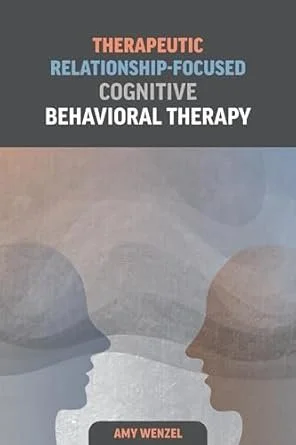
“Presents a refreshing and necessary paradigm shift for the therapeutic relationship… The book powerfully illustrates how the most impactful CBT often emerges when relational impasses are skillfully navigated using CBT principles, offering profound learning and generalization… Highly recommended. Graduate students, faculty, and professionals.”
—Choice, American Library Association
Purchase: Amazon or American Psychological Association
Therapeutic relationship-focused CBT, or TRF-CBT, is an approach to cognitive behavioral therapy that treats the therapeutic alliance as a central mechanism of change rather than a contextual backdrop.
The framework retains the structured, evidence-based techniques of standard CBT while adding explicit clinical attention to how the therapeutic relationship is formed, sustained, and repaired across the course of treatment. It is designed to make CBT more effective with clients who struggle to engage with structured interventions.
TRF-CBT is not a departure from evidence-based practice. It extends it. Clinicians working with complex presentations have long recognized that technique alone does not account for all outcomes. TRF-CBT gives that clinical reality a structured, research-grounded framework.
What Is Therapeutic Relationship-Focused CBT?
TRF-CBT is a clinical framework that integrates the therapeutic alliance directly into the delivery of cognitive behavioral therapy interventions. In standard CBT, the relationship between clinician and client is understood as important but largely separate from the interventions themselves. TRF-CBT changes that structure. The quality of the alliance is not just the container for CBT techniques. It becomes part of the treatment itself.
The framework was developed by Dr. Amy Wenzel, a psychologist and CBT researcher whose work spans clinical care, training, and scholarship in cognitive behavioral therapy. Dr. Wenzel built TRF-CBT in response to a consistent clinical challenge: clients who have difficulty engaging with structured CBT because the relational conditions for productive work are not yet in place.
TRF-CBT addresses that challenge directly. It offers clinicians a way to assess and actively work with alliance factors from the outset of treatment, rather than treating them as preconditions that are either present or absent.
Why the Therapeutic Alliance Matters in Evidence-Based CBT
Decades of psychotherapy research identify the therapeutic alliance as one of the most consistent predictors of treatment outcome across orientations. APA's recognition that the therapeutic alliance is an empirically supported element of effective therapy reflects a broad research consensus that the relationship between clinician and client contributes meaningfully to change, independent of the specific techniques used.
For CBT practitioners, this creates a practical question. CBT is built on structured techniques: cognitive restructuring, behavioral experiments, exposure hierarchies, activity scheduling, and problem-solving.
These methods work. And yet, in cases where alliance ruptures go unaddressed or where the client struggles with interpersonal schemas that interfere with the therapy relationship, outcomes can stall. TRF-CBT was developed to equip clinicians with explicit tools for working with that relational dimension, without abandoning the rigor and structure that define effective CBT.
The framework does not treat warmth or rapport as a vague soft skill. It operationalizes the therapeutic relationship in clinical terms that CBT practitioners can assess, monitor, and address with the same precision they bring to cognitive and behavioral interventions.
What TRF-CBT Adds to Standard CBT Practice
Standard CBT follows a well-established structure. The clinician conducts a thorough assessment, develops a case conceptualization, and delivers targeted interventions matched to the client's presenting concerns. That structure is effective across a wide range of presentations.
TRF-CBT adds a clinical layer that runs alongside that structure. Practitioners using TRF-CBT attend explicitly to how the therapeutic relationship is developing, what interpersonal patterns the client brings into the therapy room, and how those patterns interact with the delivery of CBT interventions.
When a client struggles to complete homework, avoids disclosing in session, or seems superficially compliant without genuine engagement, TRF-CBT provides a framework for understanding those patterns in relational terms and addressing them clinically.
Key additions TRF-CBT makes to standard practice include:
Alliance formation and monitoring as an active clinical task from session one
Rupture recognition and repair using structured CBT-compatible approaches
Interpersonal schema work embedded within standard cognitive restructuring
Relational case conceptualization that integrates attachment and schema factors with standard CBT case formulation
Supervision frameworks for training clinicians to develop relational attunement alongside technical skill
These additions are designed to be compatible with existing CBT competencies. Clinicians trained in standard CBT do not need to abandon their framework. TRF-CBT builds on it.
Clinical Presentations TRF-CBT Is Suited For
TRF-CBT is especially relevant in clinical situations where standard CBT has not progressed as expected. These include:
Clients with comorbid personality features whose interpersonal schemas interfere with the structured demands of CBT. These clients often respond to alliance-sensitive approaches when they do not respond to technique-focused ones.
Clients with trauma histories who approach the therapy relationship with well-founded wariness and need a clinician who can work relationally before deploying structured interventions.
Clients who have experienced prior therapy dropout, where the therapeutic relationship itself has become a source of apprehension.
Clients with strong interpersonal expectations that are activated within the therapy relationship and interfere with productive CBT work.
The framework is also applicable in supervision and training contexts. Supervisors can use TRF-CBT as a structured lens for helping trainees develop both technical CBT competence and relational attunement simultaneously.
Graduate students in clinical psychology, counseling, and social work programs will find the framework a practical introduction to relational dimensions of evidence-based therapy.
What's Inside This Book
Part I: Foundations of TRF-CBT
The first section of the book establishes the conceptual and research foundation for the framework. Readers will find a review of the evidence base for the therapeutic alliance in CBT, a clear explanation of how TRF-CBT differs from both standard CBT and purely relational approaches, and the theoretical architecture that supports the integration of alliance work with CBT technique.
This section also covers the core clinical skills required for TRF-CBT practice: alliance assessment, relational case conceptualization, and the identification of interpersonal patterns that affect treatment engagement.
Part II: Clinical Applications
The second section moves from framework to practice. Each chapter addresses a specific clinical challenge or population and demonstrates how TRF-CBT principles apply in that context. Readers will find detailed clinical illustrations, session-level guidance, and practical tools they can bring directly into their work.
Applications include complex and comorbid presentations, working with clients who show limited initial engagement, and the use of TRF-CBT principles in supervision and training.
Who This Book Is For
This book is written for practicing clinicians, supervisors, and trainers who work within a CBT framework and want a structured, research-grounded approach to the relational dimensions of that work. Its primary audience includes:
Psychologists and licensed therapists practicing CBT in individual and group formats
CBT supervisors seeking a framework to develop relational skills in trainees
Graduate students in clinical psychology, counseling psychology, and social work training programs
Psychiatrists and psychiatric nurse practitioners who use CBT-informed approaches in medication management contexts
Faculty and trainers developing CBT curricula that include evidence-based relationship skills
The book is written to be practically applicable at every career stage. Early-career clinicians will find it a structured introduction to the relational side of CBT. Experienced practitioners will find it a framework for cases where standard CBT has not produced the expected progress.
About the Author
Dr. Amy Wenzel developed TRF-CBT from decades of clinical research and practice in cognitive behavioral therapy. She is internationally recognized for her contributions to the field, including peer-reviewed publications and journal contributions across CBT, suicide prevention, and perinatal distress.
Her prior books include the Innovations in Cognitive Behavioral Therapy, the Handbook of Cognitive Behavioral Therapy, and Cognitive Behavioral Therapy Techniques and Strategies, among many others. She practices in Bryn Mawr, Pennsylvania, and maintains active roles in clinical training and scholarship.
Dr. Wenzel's background, faculty appointments, and clinical training are detailed on her biography page.
Here's a comprehensive, multi-pathway CTA section built for the two distinct audiences landing on this page: clinicians who want the book and framework, and professionals or organizations seeking Dr. Wenzel's training, speaking, or consultation.
Ready to Bring TRF-CBT Into Your Practice?
This book is a starting point, not a ceiling. Clinicians who engage seriously with TRF-CBT typically find that the framework opens questions about case conceptualization, supervision, and training that extend well beyond a single volume.
The resources below are designed to support that broader engagement.
Explore the full body of work. TRF-CBT sits within a larger research and clinical program. Dr. Wenzel's peer-reviewed publications and journal contributions offer the academic foundation behind the framework, including original research on therapeutic alliance, cognitive restructuring, and complex CBT presentations. For clinicians building a scholarly argument for TRF-CBT in a training or institutional context, the publications archive is the right place to start.
Go deeper with video and audio resources. Concepts in TRF-CBT are easier to absorb when you can observe them in a clinical demonstration. Dr. Wenzel's APA video demonstrations and clinical training videos show evidence-based CBT techniques in practice, including the kind of relational attunement that TRF-CBT makes explicit. The audiobook library offers an additional format for clinicians who absorb material better through listening than reading.
Review the broader CBT library. TRF-CBT is one framework within a larger body of clinical writing. Practitioners who want to understand where TRF-CBT sits relative to Dr. Wenzel's other contributions can review the full books and publications overview on her biography page, which includes her training roles, faculty appointments, and the development of the framework in context.
Inquire about speaking, training, or consultation. Institutions, training programs, and group practices that want to introduce TRF-CBT into supervision curricula or staff development can reach out through the contact page. Dr. Wenzel consults on training design and accepts speaking and workshop engagements for professional audiences.
Clinicians who want to bring TRF-CBT into their practice can explore the full range of Dr. Wenzel's clinical and training resources on her biography page or reach out directly to discuss speaking, training, or consultation opportunities.